Chapter 02 · Calcutta, 1904–1925
Before
the prison
Twenty-one years of a life that has almost entirely been overwritten by its last sixty-three days. A house in Calcutta, a mother who died early, a good school record, a city in political ferment, and a seventeen-year-old who walked into a picket line and out of it into a cell.
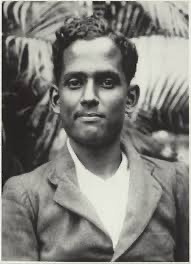
A Calcutta childhood
Jatindra Nath Das was born on 27 October 1904 in Calcutta, the capital — for three more years — of British India. His father was Bankim Behari Das. His mother was Suhasini Debi, and she died when Jatindra was nine years old.
Almost nothing beyond this is securely documented about his household. The standard biographical accounts record the parents' names, the year of the mother's death, and the existence of a younger brother, Kiron Das, who reappears at the very end of the story: it is Kiron who is recorded as having been with him when he died in Lahore in 1929, and Kiron who accompanied his body home.
This archive does not extrapolate beyond that. Where popular retellings supply scenes of childhood — conversations, temperaments, formative shocks — they are supplying them from imagination rather than from evidence, and the temptation to do the same here has been declined. What can be said is contextual rather than personal, and it is worth saying, because the context was extraordinary.
The Calcutta of Das's childhood was the most politically charged city in India. The partition of Bengal in 1905 — the year after his birth — and the Swadeshi agitation that followed it had made mass boycott, indigenous manufacture and student mobilisation into everyday facts of Bengali life. The partition was annulled in 1911, and the capital moved to Delhi in 1912, but the political habits formed in those years did not dissolve. A boy growing up in Calcutta in the 1910s grew up among adults for whom organised opposition to British rule was ordinary.
A student, interrupted
His academic record survives in outline, and it is the record of a capable student whose education was broken twice by the state rather than by anything of his own choosing.
Matriculation — first division
He passes the Matriculation examination in the first division. He is sixteen going on seventeen. It is also the year the Non-Cooperation Movement reaches its height across India.
Non-Cooperation, and a first sentence
He joins the Non-Cooperation Movement and is convicted for picketing shops selling foreign cloth in Burrabazar, the great commercial quarter of north Calcutta. He is imprisoned in Hooghly Jail. Picketing of this kind was one of the movement's central tactics: a boycott of imported textiles intended to strike at the economic logic of the colonial relationship itself.
South Suburban College
He enrols at South Suburban College in Calcutta — the institution known today as Ashutosh College. The Non-Cooperation Movement has by now been suspended by Gandhi following the violence at Chauri Chaura in February 1922, and a generation of young Indians is left to decide what politics remains available to it.
Intermediate — first division
He passes the Intermediate examination in the first division. During his college years he is also recorded as taking part in flood relief work in north Bengal — the unglamorous, practical side of the student politics of the period, and a reminder that nationalist organisation in Bengal was as much about service as about confrontation.
Vidyasagar College, and the end of his studies
He is reading for a B.A. at Vidyasagar College, Calcutta, when he is arrested in November 1925 for his political activities. By this point he is a member of the Anushilan Samiti. He never completes the degree. He would spend most of the next three years in prison, and would be free for only about seven months between his release in October 1928 and his final arrest in June 1929.
The Bengal he grew up in
To understand why an academically successful Calcutta student ended up in Hooghly Jail at seventeen, it helps to know what Bengal's political landscape actually looked like in the years he was in school.
Colonial rule was, by then, contested rather than accepted. The Indian National Congress, founded in 1885, had shifted from petitioning to mass mobilisation. After the First World War, in which more than a million Indians served, the promise of political reform was widely felt to have been broken. The Rowlatt Act of 1919 extended wartime emergency powers into peacetime; the massacre at Jallianwala Bagh in Amritsar in April 1919 destroyed, for a great many Indians, the remaining assumption that British rule was lawful in any meaningful sense.
Gandhi's Non-Cooperation Movement, launched in 1920, converted that anger into a programme: boycott of British goods, courts, schools and titles. It was the first Indian political movement in which schoolchildren and college students participated in enormous numbers, and it is the movement that produced Das's first conviction. Its suspension in February 1922, after protesters killed policemen at Chauri Chaura, was a formative disappointment for many young participants.
Bengal also had an older, separate tradition: the clandestine revolutionary societies. The Anushilan Samiti was founded in the first years of the twentieth century, initially as a network of physical-culture clubs, and became the largest of these organisations. It, and the Jugantar group that emerged from the same milieu, operated in secret, recruited heavily from students, and were subject to sustained surveillance, mass detention without trial, and the special powers the colonial state reserved for what it classified as terrorism.
This is the tradition Das joined. Membership did not require a dramatic conversion; for many Bengali students of his generation, the samitis were simply the political organisations that existed in their neighbourhoods and colleges, and moving between constitutional agitation and clandestine work was common.
What the sources do not record is why Jatindra Nath Das personally made that choice, or what he thought about it. No diary, letter or statement of his political reasoning has been located for this archive. Accounts that describe his inner motivations are reconstructions. The verifiable facts are the organisations he belonged to and the actions the state prosecuted him for — and those are set out here without embellishment.
A note on the 1925 arrest
Sources are consistent that Das was arrested in November 1925 in connection with his political activities and imprisoned in Mymensingh Central Jail, and that he was later moved to Dacca Central Jail and then to Mianwali Jail. They are less precise about the legal basis: detention without trial under the Bengal Criminal Law Amendment machinery was widely used against suspected revolutionaries in this period, and popular accounts sometimes attach him to specific cases. Because the archive could not verify a specific charge or conviction for 1925, none is asserted here.
Sources for this page
- 01“Jatindra Nath Das”, Wikipedia — birth date and place, parents, mother's death, examination results, colleges, the 1921 Burrabazar conviction and Hooghly Jail, flood relief work, the November 1925 arrest and subsequent jails. en.wikipedia.org
- 02“Jatindra Nath Das – Revolutionary Freedom Fighter”, BYJU'S IAS — corroboration of the education record and the Anushilan Samiti membership. byjus.com
- 03General historical context for the Swadeshi movement, the Rowlatt Act, Jallianwala Bagh, Non-Cooperation and Chauri Chaura follows standard reference accounts of the Indian independence movement.